
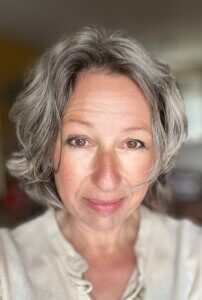
During my high school years it became clear that my professional direction would be humanistic. I have been fascinated by the uniqueness of our inner worlds and by our similarities as humans at the same time. We all want to be accepted for who we are, we want to be loved and respected. We want to enjoy a meaningful life. We want to feel safe and live our lives freely and give the world what we are good at. We are relational beings. We need to feel connected to others. We grow from relationships in our family tree. However we are most directly formed by our attachment to our parents. The way we were treated by our parents, how they responded to our needs and behaviors has a powerful impact on the neuronal networks in our brains and profoundly determines the functioning of our nervous system. Our parents are the first humans we encounter in our lives. The way they treated us implies how we define who we are today. Their voice becomes our inner voice in adulthood. Human relationships might be very nurturing but also quite hurtful. And it is often the pain that brings us to look inside and heal the hurts. We may learn to distinguish between the layers of waste and the treasures that we have accumulated in the course of our lives. We may learn how to find our way back to our core essence. We may learn how to draw on what is healthy and useful. And we learn to let go what we do not need anymore. I have experienced this adventurous journey myself but also with others for many years and I am very grateful for this. Now it is time to bring these experiences and skills to fruition by supporting my colleagues- helping professionals as EMDR consultant accredited by EMDR Europe and lecturer for SIovak Institute for Psychotraumatology and EMDR.
Education and Experience
As a co-founder of the Slovak Institute for Psychotraumatology and EMDR and EMDR Slovakia I have contributed to the development of the psychotraumatological approach and EMDR in psychotherapy in Slovakia. I was there at the birth of the basic training programmes in psychotraumatology and EMDR in our country.
As a psychologist and psychotherapist with more than 30 years of practice, I have worked mainly in the field of clinical and counselling psychology.
I have studied psychotraumatology and EMDR intensively since 2002. I gained international experience working with traumatised populations as a mental health officer on humanitarian missions abroad with Doctors Without Borders (2005–2008), where I worked on long-term missions in Pakistan (earthquake) and Uganda (chronic armed conflict).
I hold a master’s degree in psychology from the Faculty of Arts, Comenius University in Bratislava (1993).
My qualifications include: registration in the Register of Psychotherapists of the Slovak Republic (1999), the European Certificate in Psychotherapy (2000), a specialisation exam in clinical psychology (2004), and European certification for EMDR work (EMDR Practitioner, 2008) and EMDR supervision (EMDR Consultant, 2012).
In recent years, I have focused on advanced training for graduates of EMDR training programmes, such as supervision and the Gear Box for working with people with complex trauma, based on Helène Dellucci’s approach.
References
Karaszová, K.: Psychotraumatológia a vzťahová väzba: Ako uniesť dobré pocity, Psychiatria-Psychoterapia-Psychosomatika, 17, 2010, č.1, str. 80-83
Karaszová, K.: The Miraculous Moments in PCT- The Therapist’s Reflections, PERSON,
Klientenzentrierte Psychotherapie und personzentrierte Ansätze 1/2004, p. 13-20, Facultas, WUV/Universität /Európsky časopis pre na človeka zameranú terapiu/
Karaszová, K.: Zázračné momenty v terapii zameranej na človeka, EMPATIA č. 1/ 2004
Karaszová, K.: Krátka správa o rýchlych očných pohyboch /EMDR/, EMPATIA č. 2/ 2003
Karaszová, K.: Prípad klienta P., Časopis o psychoterapii zameranej na človeka č.3/1999, časopis PCAI-ISTER, p.9-22
Karaszová, K.: Prežívanie ako kľúčová oblasť zmeny v procese na človeka zameranej a experienciálnej terapie, Psychológia a patopsychológia dieťaťa 1998, ročník XXXIII, č.3, p. 264-273
Karaszová, K.: Príspevok ku štúdiu osobnostnej konštruktívnej zmeny klienta v na človeka zameranej terapii, Československá psychologie 1994 / ročník XXXVIII/č.4, p. 345-355
Karaszová, K.: PCA v terapeutickej práci Ch. Devonshira a F. Zimringa, Konfrontace, Hradec Králové, č. 1/94
References on the web:
http://www.diva.sk/poradna-otazka/24947/katarina-karaszova-ucim-sa-od-ludi-ktori-prezili/
http://zpravy.idnes.cz/zahranicni.asp?r=zahranicni&c=A080605_142303_zahranicni_ban
http://zena.sme.sk/c/5346435/hladanie-spriaznenych-dusi.html
http://www.pluska.sk/bajecna-zena/clanky/pribeh/naucim-vas-zvadzat.html
http://www.psychiatria-casopis.sk/files/psychiatria/1-2010/PSY1-2010-cla25.pdf
http://www.rtvs.sk/tv.programmes.detail/archive/2530?date=25.01.2013 – od 57. minúty
Depresia, úzkosti či narcizmus majú korene v detstve:
https://podcasty.sme.sk/t/8737/ludskost-tyzdenny-podcast-o-mentalnom-zdravi